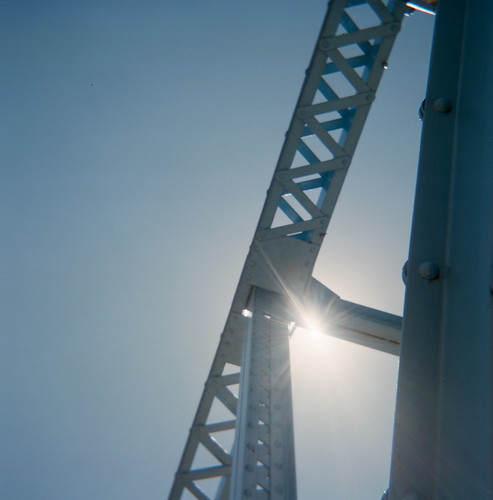
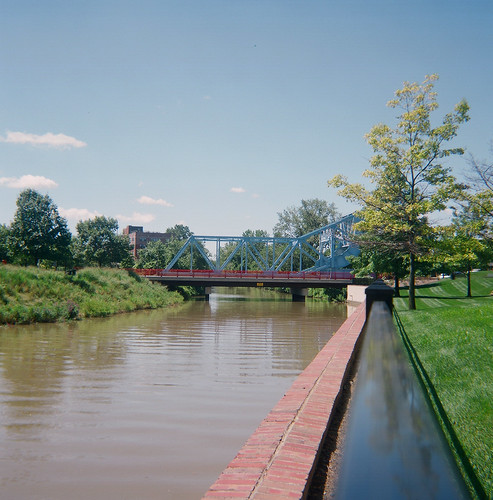
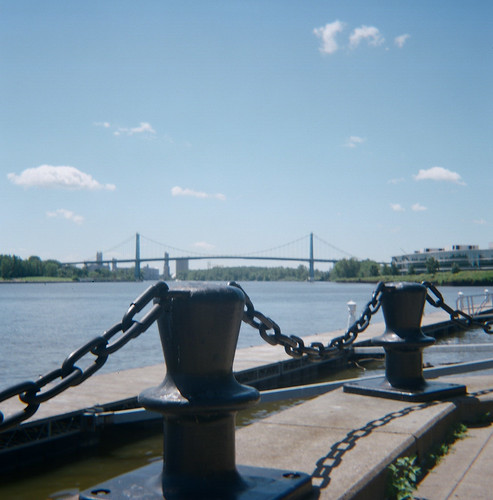
 I bought the Lubitel 2 on eBay back in August 2015 for $80 — cleaned, lubricated, and adjusted (CLA). It was the first camera I’d bought that was CLA — most of my purchases were more bargain-basement prices and labeled “as-is,” so I figured that it was worth the splurge. Plus, it was being shipped from Mother Russia, and not too many of them seemed to be coming up for sale, so I figured I’d better jump on it if I wanted one. (Had I just been patient and bought one six months later, I could have gotten it for half the price, according to an eBay search of completed auctions today. D’oh!)
After getting the images back from my test roll, I’m having more than a touch of buyer’s remorse. It’s a sweet bit of Cyrillic to have in my collection, but it’s not going to be one of my more frequently used cameras.
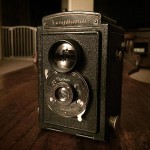 I learned about the Voigtländer Brilliant while I was doing a little research on TLRs and pseudo-TLRs. I’d read that the Voigtländer Brilliant V6 was the basis for the LOMO Lubitel TLR, so of course I wanted to get one. Alas, I jumped the gun on an eBay auction without reading carefully and ended up buying the second metal model, rather than the bakelite V6 I’d been wanting.
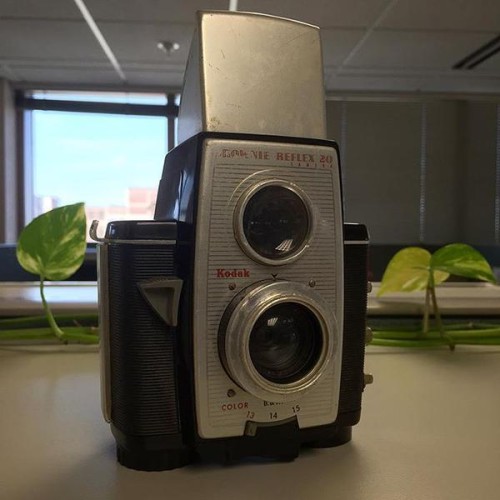 I picked up the Brownie Reflex 20 for about $12 at a local antique mall back in July. I have a thing for Brownies, and for pseudo-TLRs, especially ones that have a zone focus rather than fixed.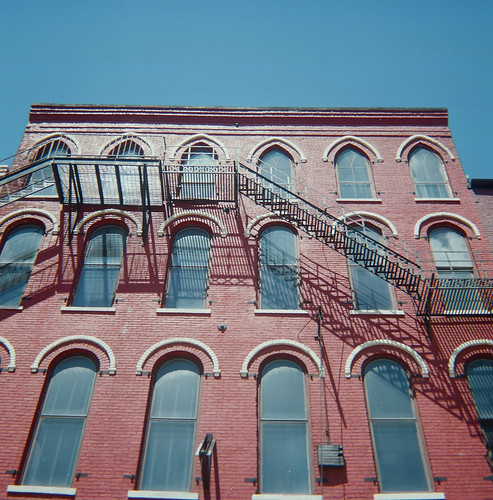
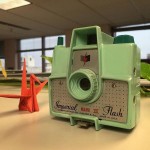 When I first bought this camera from the antique mall some eight years ago, I didn’t own any other 620 cameras — and even if I’d had an extra couple of 620 spools handy, it hadn’t even occurred to me to try respooling 120 film onto a 620 spool. I managed to run two rolls of 35mm through the camera to try some